For Teachers
Supporting the Whole Child
Teachers shape far more than academic learning.
Every day, children bring emotions, worries, friendships, family experiences, hopes, and struggles into the classroom.
BCHBH helps schools create learning environments where emotional awareness can grow alongside academic development.
The goal is not to add another subject.
The goal is to help children feel safe enough to learn.
Starting with connection
Every Child Wants to Belong
Before children can fully engage in learning, they need to feel accepted and connected.
A sense of belonging helps children:
- feel safe
- participate more confidently
- build healthy relationships
- develop resilience
Small moments of connection often have a lasting impact.
A smile, a greeting, a moment of listening, or simply being noticed can make a significant difference in a child's day.
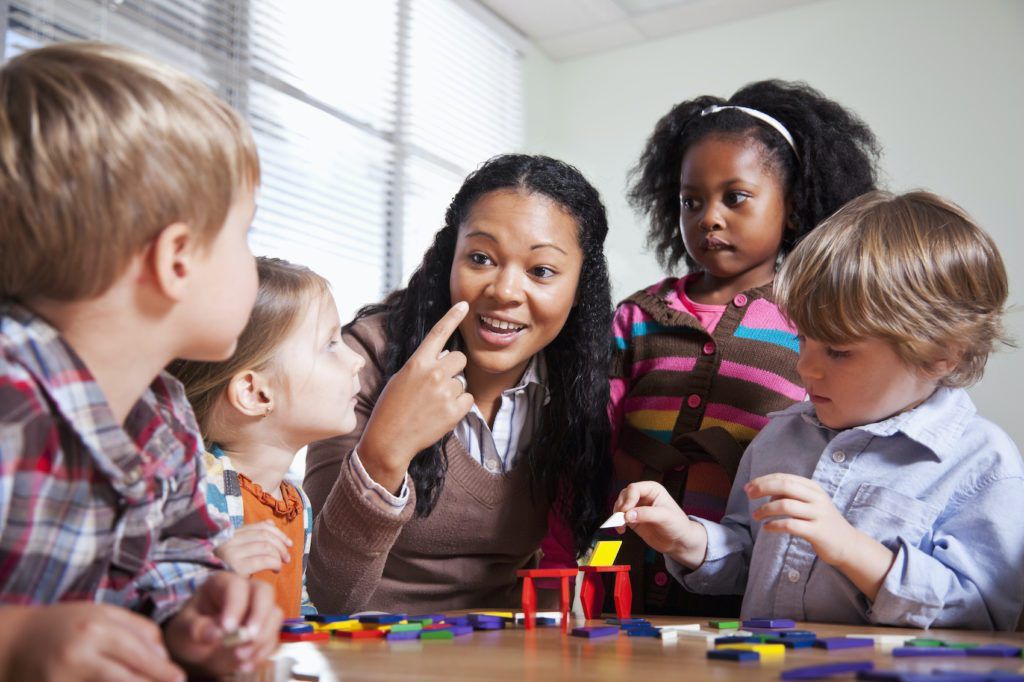
Understanding Behaviour Differently
Behaviour is often a form of communication.
When children become disruptive, withdrawn, anxious, or frustrated, there is usually something happening beneath the surface.
Instead of asking:
“How do I stop this behaviour?”
BCHBH encourages educators to explore:
“What might this child be experiencing?”
This shift creates opportunities for understanding, support, and growth.
Using the Heart Bottle in the Classroom
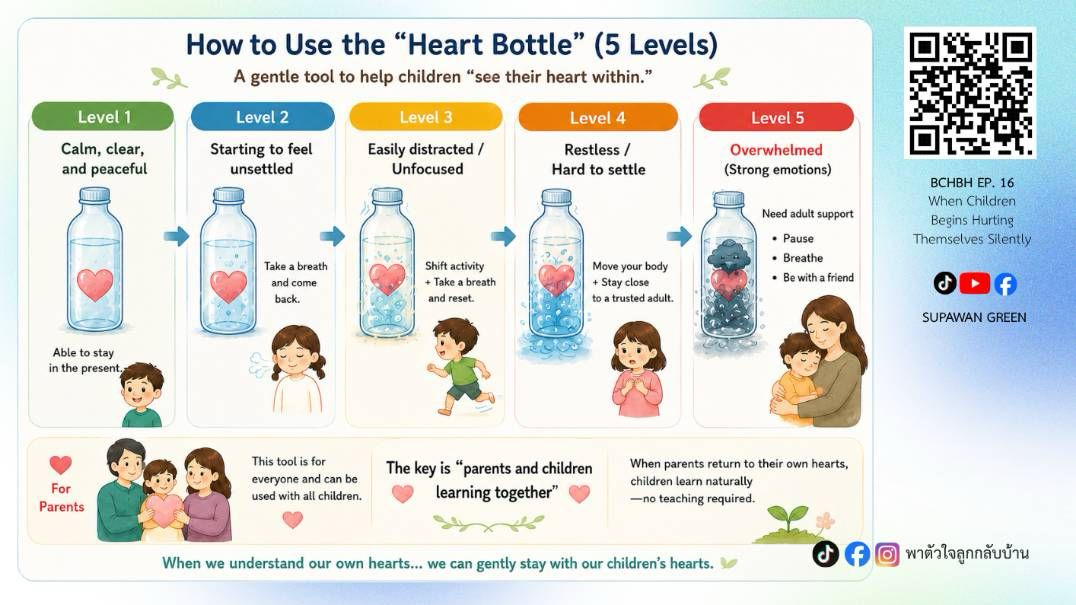
The Heart Bottle provides children with a simple and non-threatening way to talk about emotions.
Teachers can ask:
- How full is your Heart Bottle today?
- What added water to your bottle?
- What helped your bottle feel lighter?
The Heart Bottle encourages emotional awareness without requiring children to share more than they are comfortable sharing.
The Weight We Carry
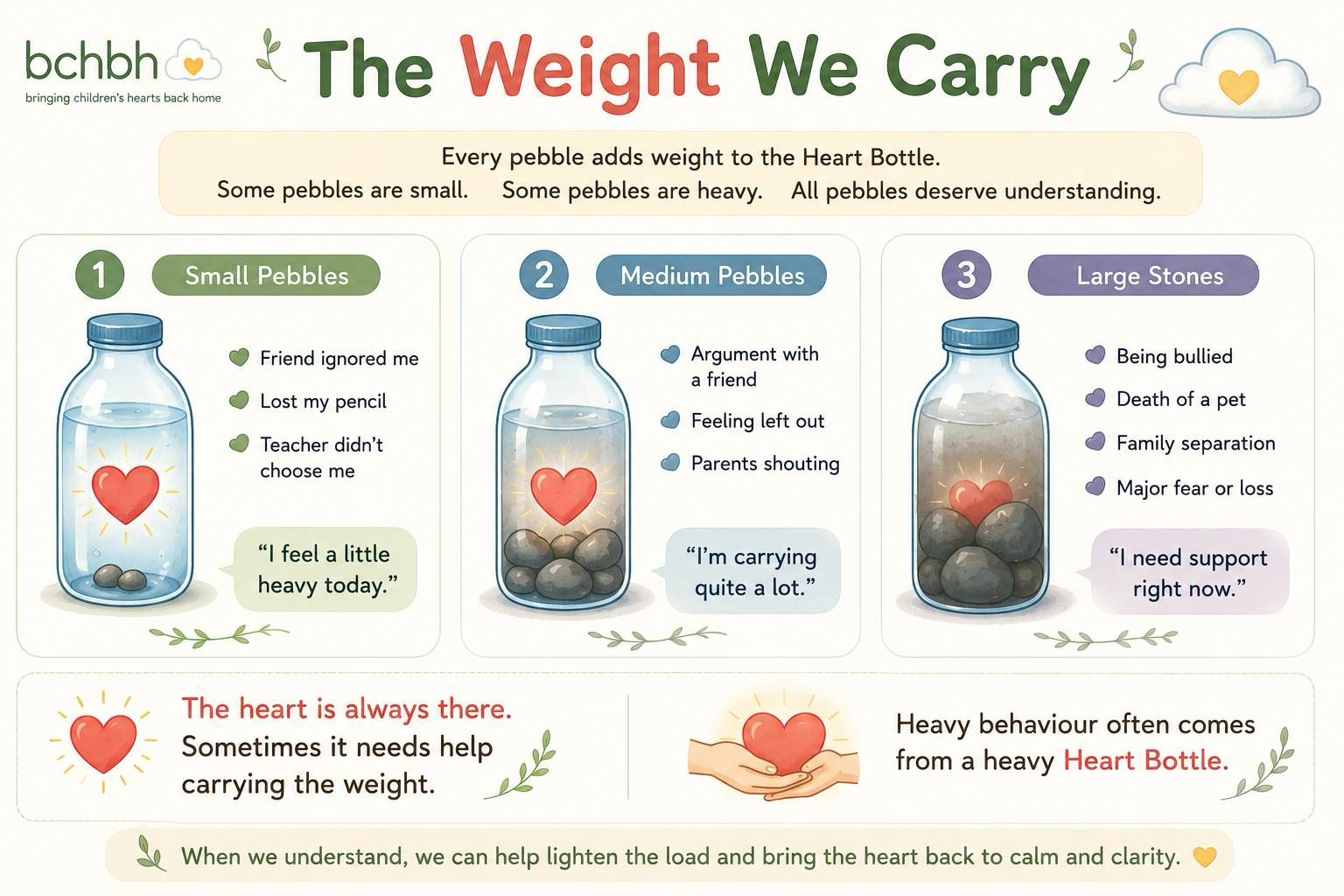
Every pebble adds weight to the Heart Bottle.
Some pebbles are small.
Some pebbles are heavy.
All pebbles deserve understanding.
Children often understand emotional weight more easily than emotional terminology.
The goal is not to ask:
“What's wrong with you?”
Instead BCHBH asks:
“What are you carrying today?”
What's In Your Heart Bottle Today?
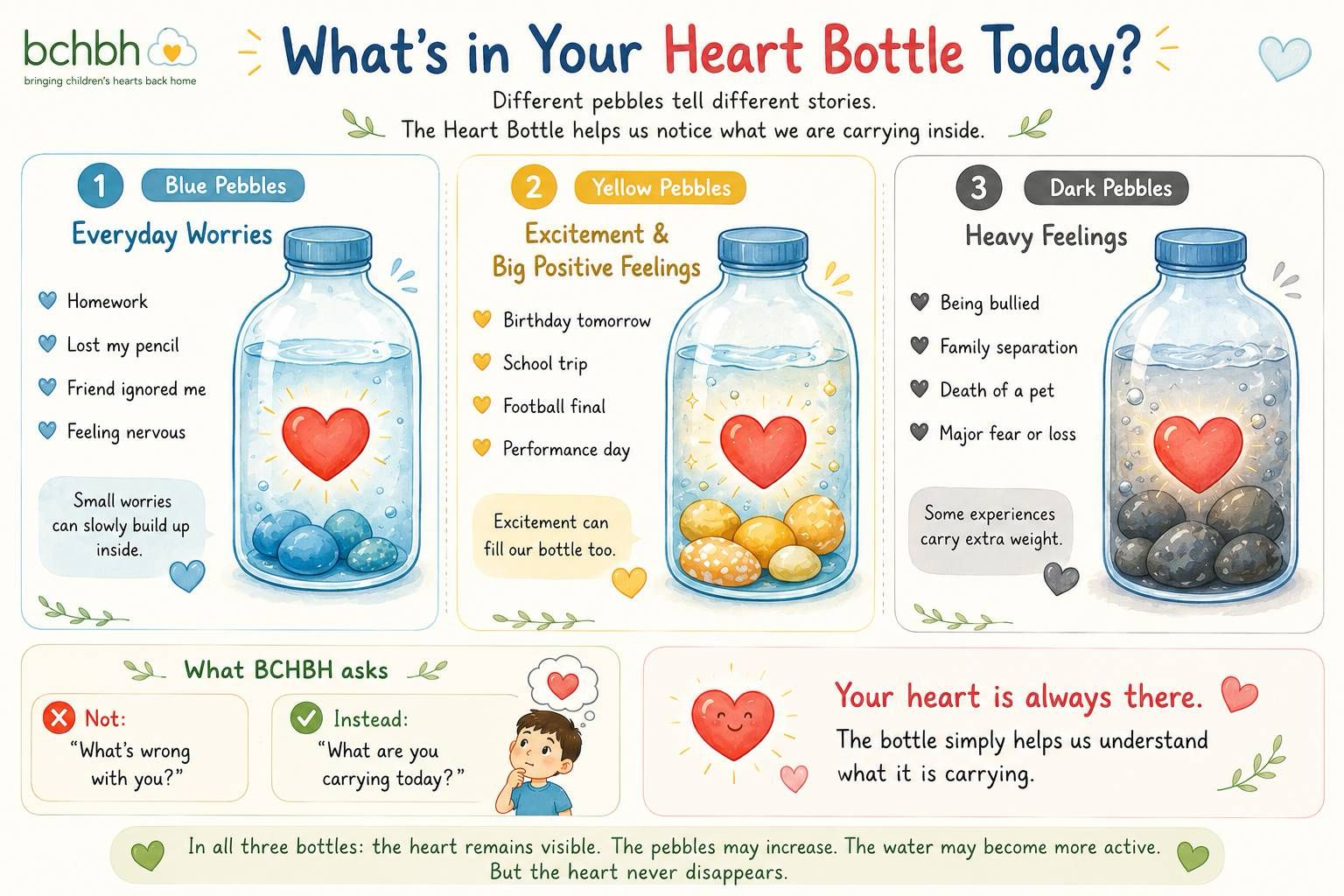
Different pebbles tell different stories.
Some children may be carrying:
- everyday worries
- excitement
- friendship challenges
- family concerns
- grief
- fear
- uncertainty
The Heart Bottle helps children notice what they are carrying without judgement.
The heart always remains present.
Classroom Check-In Ideas
Teachers might ask:
Children can answer as much or as little as they wish.
The goal is awareness, not disclosure.
Creating Emotional Safety
Children learn best when they feel emotionally safe.
Emotional safety grows when classrooms include:
- respect
- consistency
- kindness
- clear boundaries
- opportunities to express feelings
A calm classroom does not mean the absence of emotion.
It means children know their emotions are welcome and manageable.
Small Moments Matter
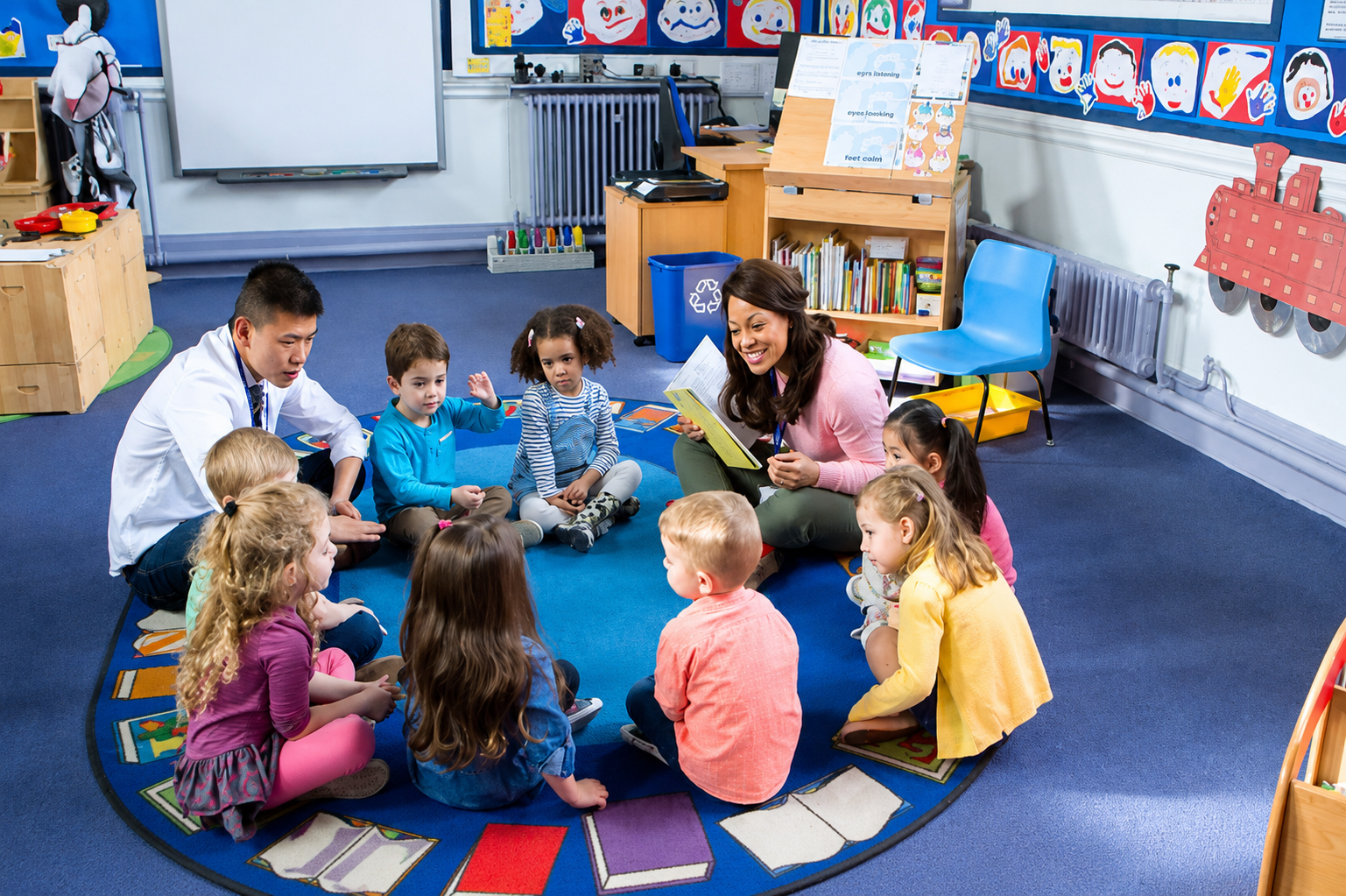
Emotional learning does not always require special lessons.
It often happens during everyday moments:
- greeting children in the morning
- checking in after break time
- resolving disagreements
- celebrating effort
- helping children recover after mistakes
These small interactions gradually build emotional resilience.
Supporting Yourself as a Teacher
Teachers care deeply about children, but they also carry emotional pressure of their own.
BCHBH recognises the importance of teacher wellbeing.
Children benefit when the adults around them are supported, valued, and emotionally aware.
You do not need to be a perfect teacher.
You only need to keep showing up with care and willingness to learn.
Growing together
A Shared Journey
BCHBH is not a programme that belongs only to children.
It is a shared journey involving teachers, parents, caregivers, and communities.
When adults develop emotional awareness, children naturally learn from what they experience every day.
Together, we help bring children's hearts back home.
Next: BCHBH Kids
Children learn best when ideas are presented in ways they can understand and enjoy.
The next section introduces BCHBH directly through the eyes of children.